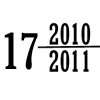
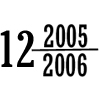
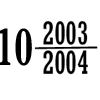
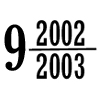
The Dangling Modifier is an international newsletter by and for peer tutors in writing, produced in association with the NCPTW. The mission of The Dangling Modifier is to provide an international forum for ongoing conversation among peer tutors in writing. Spring 2010 Edition 16 Number 2


A Call For Nominations

 
The 2010 NCPTW Ron Maxwell Award for Distinguished Leadership in Promoting the
Collaborative Learning Practices of Peer Tutors in Writing The Pennsylvania State University

Deadline for Nominations: August 31, 2011. The NCPTW Ron Maxwell Leadership Award is given annually to a professional in the National Conference on Peer Tutoring in Writing organization who has contributed with distinction to undergraduate student development through promoting collaborative learning among peer tutors in writing. The award recognizes an individual for dedication to and leadership in collaborative learning within writing centers...


Investing Tutors in the Future of Writing Center Theory and Practice

 
Matthew Schultz
Saint Louis University

When preparing for tutor training and staff development meetings, administrators and peer-organizers often expect that tutors will have their identities and ideas challenged as new experiences disrupt their previously held beliefs. But as these tutors’ ideas are challenged, do administrators and organizers invite them to challenge the communal identity of the Writing Center? In other words, is staff development collaborative? If the aim of Writing Centers is, as Steven North proclaimed in 1984 and we have been following since, “to produce better...


ESL: Every Student Learns

 
Lou Londino
The Pennsylvania State University

Every tutor has had to work with a particularly difficult student at one time or another. Some students are stubborn about their work, and some are too timid to engage in a discussion. Others do not even want to go to the Writing Center, but are forced to by professors. Although these tutorials may frustrate tutors, the most challenging deal with students struggling to convey ideas, paper organization, plagiarism, and, as is the case for most ESL students, understanding the fundamentals of the English language...


Finding My Way Back to North

 
Jesse Knifley
Western Kentucky University

I applied for a gradate assistantship at Western Kentucky University on a whim, figuring, “I might as well see if I can get some money for this school thing.” After my acceptance, I faced the very real problem of figuring out how to teach. I had never given much thought to myself behind a podium, and I felt that I might be marginally delusional if I thought I could pull off such a feat of pedagogical witchery. Luckily, Western provides its GAs with an extensive preparation program before they enter the classroom, starting with two semesters as a tutor in the writing center...


Channeling Rachel Ray in the Writing Center: The 30-Minute Workshop

 
Tiffany DeRewal & Edward H. Howell 
Villanova University 

The authors first presented the following piece with Villanova University Writing Center Director Mary Beth Simmons as a workshop at the 2010 Mid-Atlantic Writing Center Association Conference. Rachel Ray did not endorse the workshop or this article, and we do not claim to use her brand.

 We are not fans of Rachel Ray's cooking show, her business model, or her flagrant use of the acronym "EVOO" (extra virgin olive oil). What we do value is her "30-Minute Meals" concept and how we can adopt it to teaching first-year students. In 2004, as part of an effort to expand our writing instruction beyond our standard 50 minute one-on-one peer tutoring session, the Villanova Writing Center introduced the "30-Minute Workshop," which we now offer once per week "after hours" at the Center. These workshops are taught by graduate students and lure students in by offering cookies, a handout, and the promise that the session will take only 30 minutes...


From Creepers to Collaborators: The Importance of Sharing Our Work

 
Sarah Summers
The Pennsylvania State University

As a way of incorporating my love for writing center work and my experience as a peer tutor into my course work as a Masters student in Rhetoric and Composition, I have been working on a project that examines the Writing Lab Newsletter as an important artifact for understanding writing center development in the 1970s and 80s. What has interested—and excited—me most about reading these early issues of the WLN is the way the collaborative, egalitarian spirit of peer tutoring influenced the contributions to the newsletter...


The Tutor as Academic Ambassador

 
Andrew Rihn
Kent State University

As students outside of the center, we tutors are always completing our own assignments and writing our own papers. I suggest that tutors make the writing center the subject of those papers whenever possible. Many professors, especially those teaching junior and senior level courses, allow students to apply classroom material to the subject of their choice. Tutors need only to discover the connections between their classroom education and their writing center work in order to act as an academic ambassador for the Writing Center..